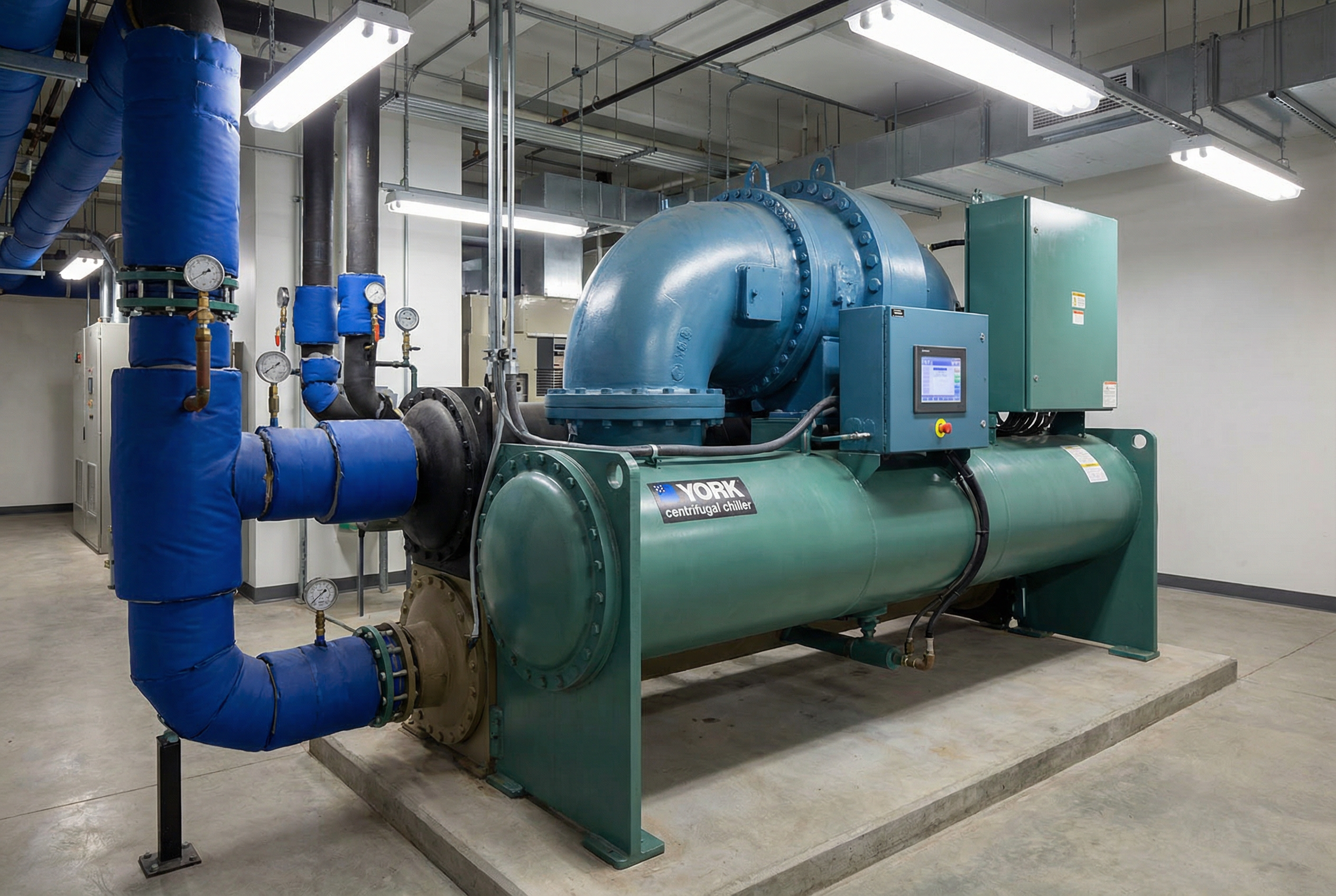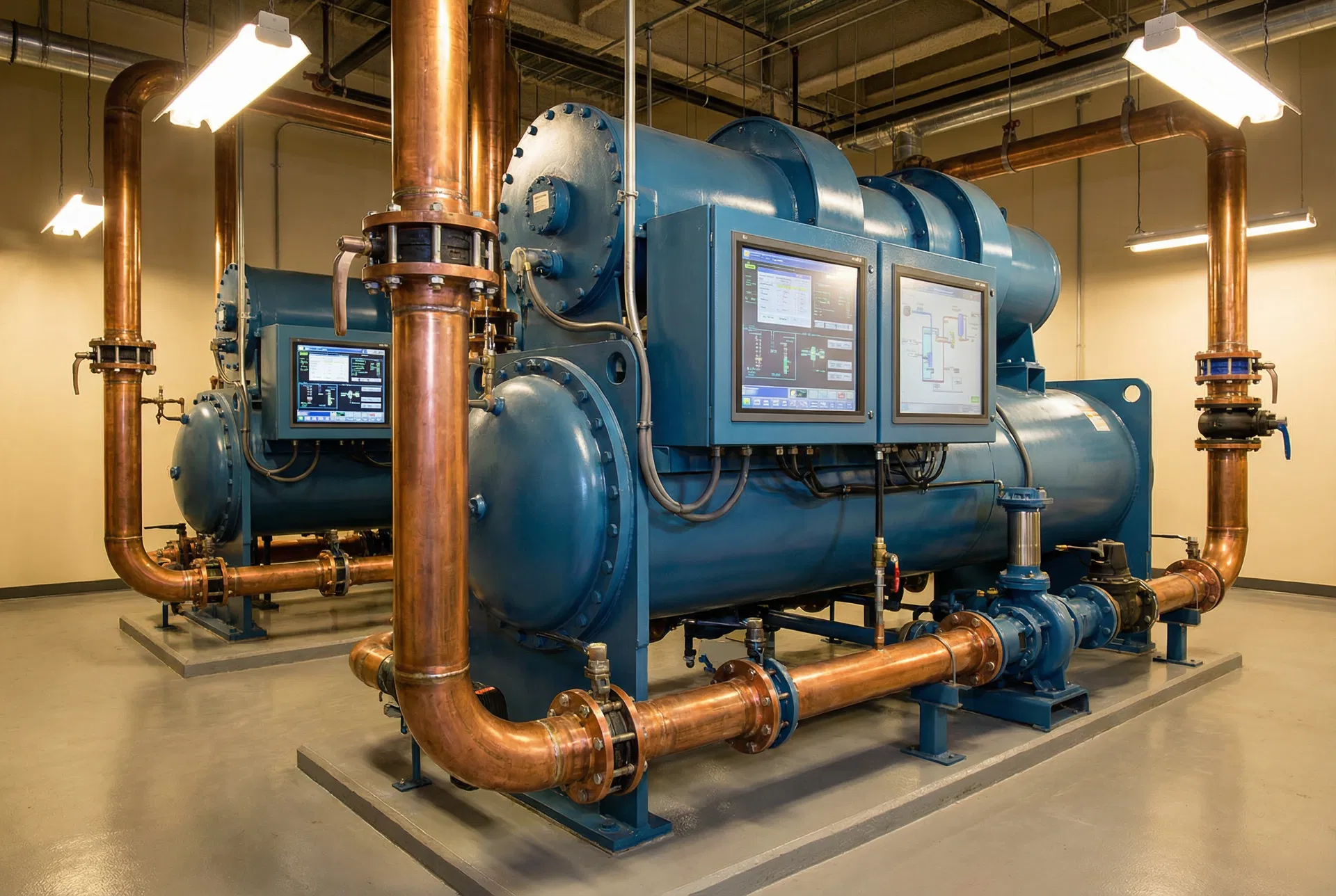
Low delta-T is probably the most common chiller plant problem I see. It shows up constantly, and most of the time nobody realizes it's happening until the energy bills come in or the plant can't keep up on a mild day.
What You're Seeing
Your chiller plant is running more chillers than it should for the load. The building is 60% occupied, it's a mild day, and somehow all three chillers are staged on. Your condenser water temps are fine, your towers are doing their job, but the plant just can't seem to keep up. Or worse — it's keeping up, but your energy bill looks like you're cooling a data center.
Here's the tell: look at your chilled water supply and return temperatures. If your design delta-T is 12°F (say, 42°F supply, 54°F return) and you're seeing 42°F supply but only 48°F return, congratulations — you've got low delta-T syndrome. That 6°F delta-T instead of 12°F means your plant is working twice as hard for the same cooling.
What It Usually Means
Low delta-T means the water is coming back to the plant too cold. The loads aren't extracting enough heat from the water. And before you say "well that's a good thing" — no. No it is not. Here's why:
The water is flowing too fast through the coils. The control valves are wide open or oversized, so the water blasts through the heat exchanger before it has time to pick up heat. It's like trying to cook a steak by running it under the broiler at 100 mph. You're not going to get a sear.
The coils are dirty or undersized. If the coil can't transfer heat effectively, the water passes through without picking up its design load. Same result — cold water coming back.
Three-way valves are bypassing. This is a big one, especially in older buildings. Three-way valves at the AHU bypass water around the coil to maintain flow. That bypassed water goes straight back to the plant at supply temperature, diluting your return water. I've seen buildings where 40% of the flow was bypass. Forty percent! That's not a chilled water system, that's a very expensive water feature.
What to Check
Start at the loads, not the plant. I know everyone wants to blame the chiller, but the chiller is usually the victim here, not the criminal.
Step 1: Check your control valves. Are they modulating properly? Are they oversized? A valve that's 2 sizes too big will hunt between 5% and 15% open and never give you proper control. I've pulled valves that were spec'd at 6" when the pipe was 4". Someone looked at the flow rate and forgot about the pressure drop. Classic.
Step 2: Check your coil delta-T at each AHU. Measure entering and leaving water temps at every air handler. The ones with low delta-T are your problem children. Fix those first.
Step 3: Look for bypass. Three-way valves, balance valves left open, crossover piping — anywhere water can get back to the plant without going through a coil is killing your delta-T.
Step 4: Check your pump speed. If you're running variable primary or primary-secondary, are your pumps ramping down when the load drops? Or are they just blasting water through at full speed regardless? I've seen VFDs on pumps that were set to minimum 80% speed. That's not variable — that's "slightly less constant."
Common Mistakes
The biggest mistake I see is throwing more chillers at the problem. "The plant can't keep up, stage another chiller." No! You're making it worse. More chillers means more flow through the evaporators, which means even lower delta-T, which means even more chillers. It's a death spiral.
The second biggest mistake is ignoring it because the building is comfortable. Yeah, the building is comfortable — at three times the energy cost. Your building owner might not notice the comfort problem, but they'll definitely notice the utility bill.
Field Notes
I worked on a hospital plant a few years back — three 500-ton centrifugals, beautiful plant, well maintained. They were running all three chillers on a 70°F day. The chief engineer was convinced they needed a fourth chiller. I spent two days tracing piping and checking valves. Turned out they had 14 three-way valves on AHUs that had been converted to two-way operation — except nobody actually capped the bypass port. Every single one was bypassing. We capped them, rebalanced the system, and suddenly two chillers could handle the whole building on a design day. Saved them about $180K a year in energy.
The moral of the story: the answer is almost never "buy more equipment." The answer is almost always "figure out why the equipment you have isn't working right."
And if someone tells you low delta-T isn't a big deal — ask them who's paying the electric bill.
Frequently Asked Questions
What is low delta-T in a chilled water system?
Low delta-T occurs when the temperature difference between chilled water supply and return is less than design. For example, if your system is designed for 12°F delta-T (42°F supply, 54°F return) but you're only seeing 6°F, the water is returning too cold and the plant has to work harder.
What causes low delta-T syndrome?
The most common causes are oversized or malfunctioning control valves, dirty coils, three-way valve bypass, and pumps running at excessive speed. The root cause is almost always at the loads, not at the chiller plant.
How do you fix low delta-T in a chiller plant?
Start by checking control valves at each AHU for proper sizing and operation. Eliminate bypass paths from three-way valves. Verify coils are clean and properly sized. Ensure variable speed pumps are actually ramping down with load.