Water treatment isn't exciting, but it's one of the most important things you can do for a boiler. I've seen more boilers destroyed by bad water than by any other single cause. Not cheap boilers either — $200,000 fire-tube boilers that lasted 8 years instead of 30 because nobody was testing the water consistently.
What You're Seeing
Your boiler tubes are pitting. Your blowdown water looks like coffee. Your makeup water meter is running more than it should, which means you're losing water somewhere. Or maybe nothing looks wrong yet — but nobody's tested the water in six months and you're just hoping for the best.
Hope is not a maintenance strategy.
What It Usually Means
Untreated or poorly treated water does three things to your boiler, and all of them are bad:
Scale. Dissolved minerals — calcium and magnesium mostly — precipitate out when heated and coat your heat transfer surfaces. Even 1/16" of scale reduces heat transfer efficiency by 12%. That's not a typo. One-sixteenth of an inch. Your boiler is working 12% harder to make the same BTUs. And scale doesn't just waste energy — it creates hot spots that can lead to tube failure.
Corrosion. Dissolved oxygen attacks steel. Low pH accelerates it. Once pitting starts, it's irreversible. You can treat the water going forward, but those pits are permanent weak points. I've seen boiler tubes that looked like someone took a hole punch to them. That's oxygen pitting, and it's 100% preventable.
Biological growth. Bacteria love warm water. They create biofilm that insulates heat transfer surfaces and causes under-deposit corrosion. Legionella is the scary one that makes the news, but even common bacteria can destroy a boiler system from the inside out.
What to Check
Here are the numbers you need to know for a typical low-pressure commercial hot water boiler:
pH: 8.5-10.5. Alkaline water protects against corrosion. If your pH drops below 8.5, you're in the danger zone. Below 7.0 and you're actively dissolving your boiler.
Conductivity: Below 3,000 µS/cm. High conductivity means high dissolved solids. That's what causes scale. If conductivity is climbing, your blowdown isn't keeping up with your makeup water.
Hardness: Below 5 ppm as CaCO3. This should be near zero if your softener is working. If you're seeing hardness in the boiler water, check your softener immediately. It's either exhausted, bypassing, or broken.
Sulfite residual: 20-40 ppm (if using sodium sulfite as oxygen scavenger). This tells you there's enough scavenger in the water to neutralize dissolved oxygen. No residual = no protection.
Common Mistakes
Relying entirely on the water treatment company. Your water treatment vendor should be testing regularly and adjusting the program. But you need to verify. Test the water yourself at least monthly. If the vendor is only showing up quarterly, that's three months of potential problems going undetected.
Not maintaining the softener. The softener is the first line of defense against scale. If it's not regenerating properly, hard water is going straight into your boiler. Check the salt level, verify regeneration cycles, and test the softener outlet for hardness regularly.
Skipping blowdown. Blowdown removes concentrated water from the bottom of the boiler. If you're not blowing down regularly, dissolved solids concentrate and eventually precipitate as scale. Automatic blowdown controllers are worth every penny.
Ignoring the condensate return. If you're returning condensate (and you should be — it's free hot distilled water), make sure it's not contaminated. Condensate that's picked up carbon dioxide becomes carbonic acid, which eats copper and steel. Test your condensate pH.
Field Notes
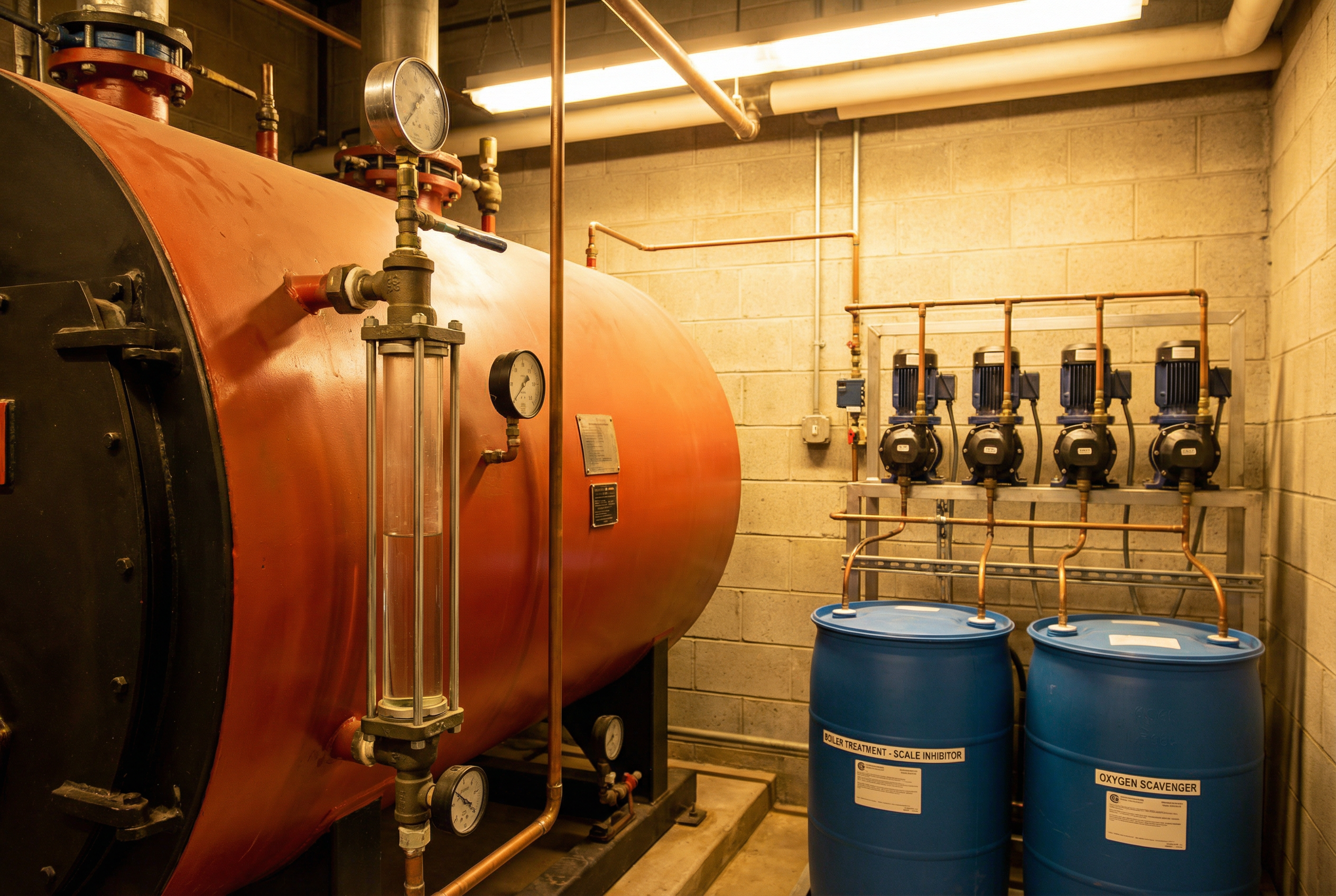
I took over maintenance on a building with two 200 HP steam boilers. The previous contractor had been "maintaining" them for five years. I pulled the water treatment logs and they were mostly blank. Tested the water on my first visit: pH was 7.2 (should be 10+), conductivity was off the charts, and there was zero sulfite residual. The water treatment chemical tanks were empty and had been for who knows how long.
Opened up the boiler for inspection and the tubes looked like the surface of the moon. Pitting everywhere. One boiler needed a full retube — $65,000. The other was borderline and we treated it aggressively to try to save it.
Total cost of proper water treatment for both boilers? About $8,000 per year including chemicals, testing, and the vendor's service visits. They'd been "saving" $8,000 a year and it cost them $65,000 in the first repair alone.
I tell every building owner the same thing: water treatment is the cheapest insurance you can buy for your mechanical systems. Skip it and you're gambling with equipment that costs six figures to replace.
Frequently Asked Questions
How often should boiler water be tested?
At minimum monthly, but weekly is better for critical systems. The basic field test should include pH, conductivity, hardness, and sulfite residual. Send samples to a lab quarterly for full analysis.
What pH should boiler water be?
For a typical low-pressure commercial hot water boiler, pH should be maintained between 8.5 and 10.5. Below 8.5 increases corrosion risk. Below 7.0 means the water is actively attacking the steel.