Static pressure is one of those things that comes up all the time in commercial HVAC, but I think a lot of guys — myself included, early on — learn just enough to get by without really understanding what's happening. You know it's measured in inches of water column, you know where to take the reading, but connecting it to what's actually going on in the system takes a bit more thought.
I didn't really understand it for a good part of my career. Nobody sat me down and explained it. I had to figure it out by reading and asking questions. Here's what I wish someone had told me earlier.
What You're Seeing
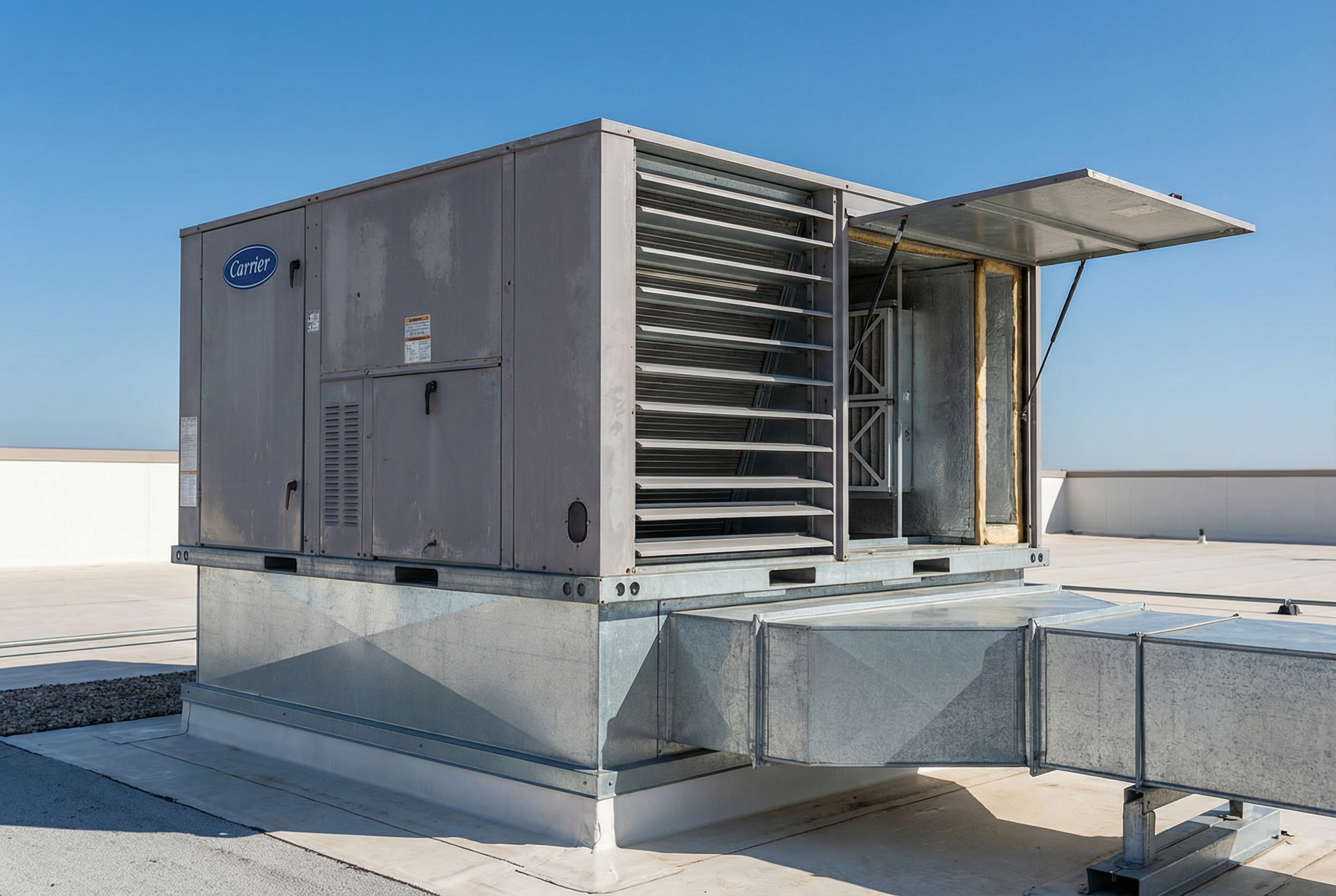
You've got a VAV system. Some zones are hot, some are cold, the building manager is calling you every day. The AHU looks fine — discharge air temp is on setpoint, the fan is running. But the zones at the end of the longest duct run are starving for air, and the zones closest to the AHU are getting blasted.
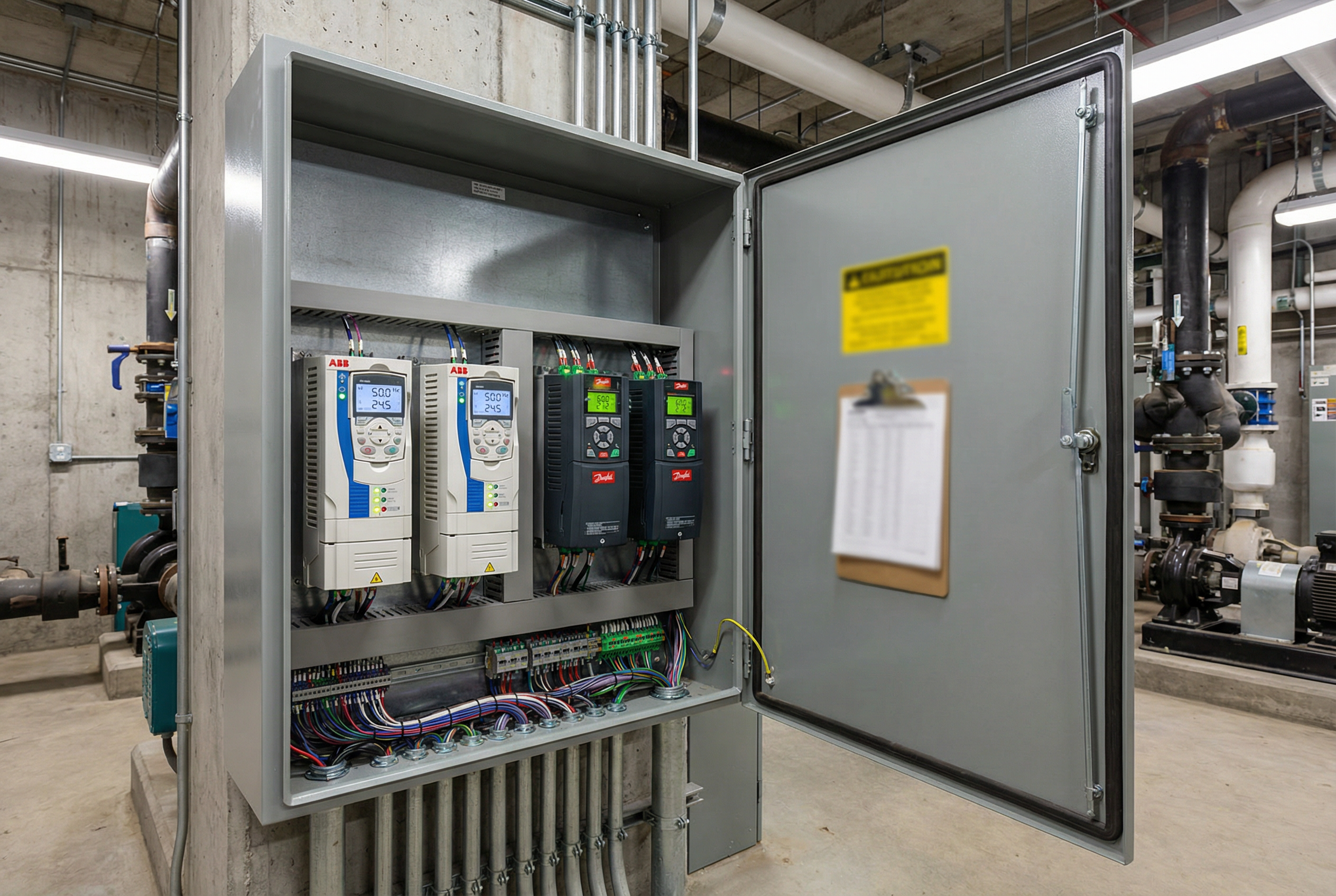
Or maybe you've got an AHU that's tripping on high static. The VFD is ramping up to 100% and the fan still can't maintain setpoint. Filters look okay. What gives?
What It Usually Means
Static pressure is resistance to airflow. That's it. That's the whole concept. Everything in the duct system — filters, coils, dampers, ductwork, fittings, diffusers — creates resistance. The fan has to overcome all of that resistance to move air through the system.
Think of it like water pressure in a garden hose. Squeeze the end of the hose and the pressure goes up but the flow goes down. Same thing in ductwork. More resistance = higher static pressure = less airflow (unless the fan speeds up to compensate).
Total External Static Pressure (TESP) is the total resistance the fan sees. It's measured as the difference between the static pressure at the fan discharge and the static pressure at the fan inlet. Every component adds to it:
- Filters: 0.25-1.0" w.c. (clean to dirty)
- Cooling coil: 0.5-1.5" w.c.
- Heating coil: 0.15-0.5" w.c.
- Ductwork and fittings: varies wildly
- Diffusers and grilles: 0.05-0.25" w.c.
- VAV boxes: 0.5-1.5" w.c.
Add it all up and you get your total system resistance. The fan has to produce at least that much static pressure to move design airflow.
What to Check
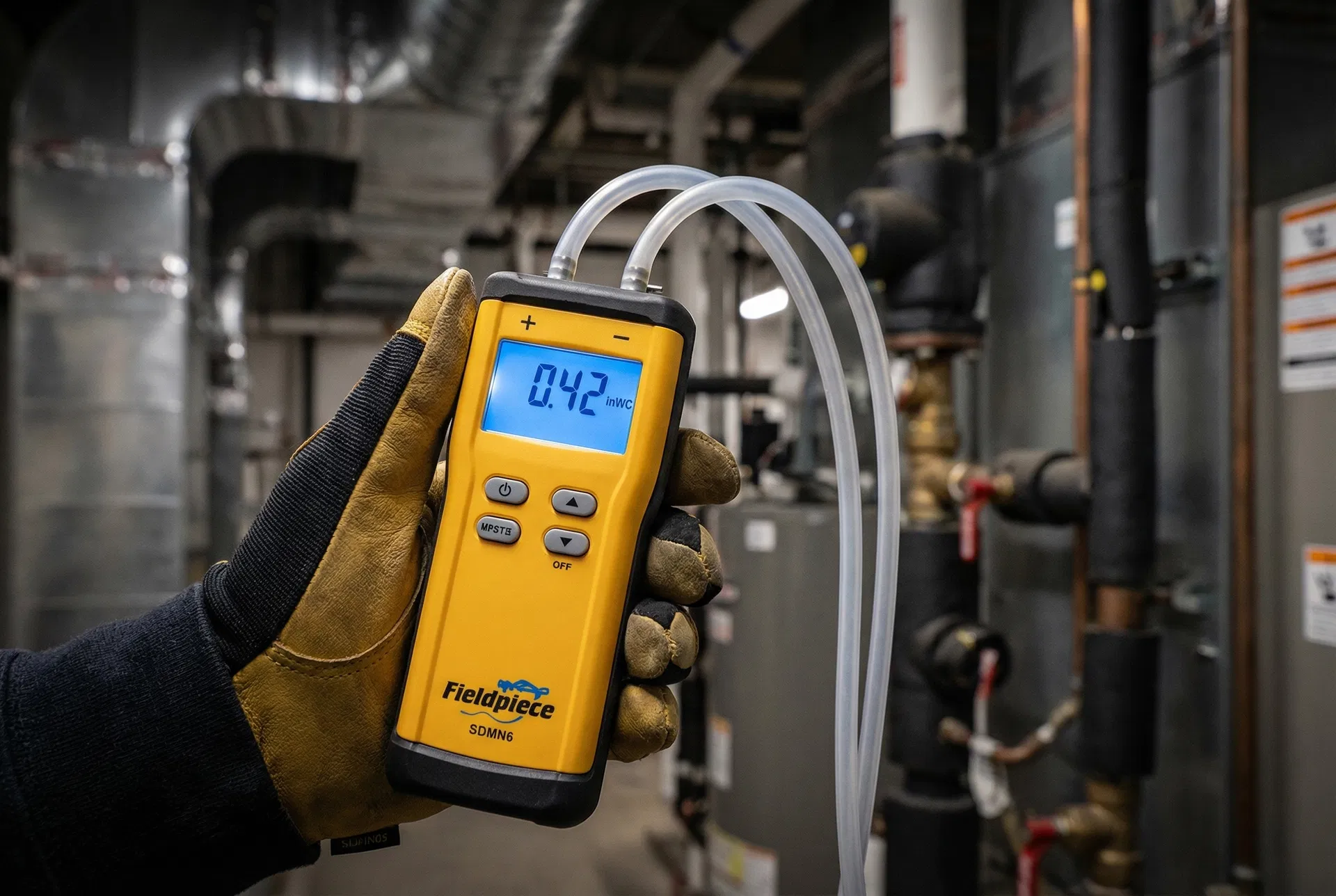
Step 1: Measure total external static pressure. Put a static pressure probe in the duct at the fan discharge and another at the fan inlet (before the filters). The difference is your TESP. Compare it to the fan's rated capacity. If TESP exceeds the fan's rating, you've found your problem — the fan literally cannot produce enough pressure to overcome the system resistance.
Step 2: Measure component pressure drops. Work your way through the system measuring the pressure drop across each component. Filters, coils, dampers, duct sections. The one with the unexpectedly high drop is your culprit.
Step 3: Check your duct static pressure sensor location. This is huge. The duct static pressure sensor that controls the fan speed should be located approximately 2/3 of the way down the longest duct run. If it's too close to the fan, the fan will maintain high pressure near the AHU and starve the remote zones. If it's too far, the fan will ramp up trying to maintain pressure at the end of a long run and over-pressurize the near zones.
I've walked into buildings where the static pressure sensor was 10 feet from the AHU discharge. The fan was maintaining 1.5" right at the unit and the zones 200 feet away were getting nothing. Moved the sensor to the proper location and suddenly the whole building balanced out. No new equipment. No duct modifications. Just moved a sensor.
Step 4: Check for duct leakage. Commercial ductwork leaks. Sometimes a lot. If you're losing 20% of your air to leakage before it gets to the zones, no amount of fan speed is going to fix your comfort problems. Seal the ductwork.
Common Mistakes
Setting static pressure setpoint too high. I see this constantly. Someone sets the duct static pressure setpoint to 2.0" w.c. because "that's what the engineer spec'd." But the engineer spec'd that for design day at full load. On a mild day at 40% load, you don't need 2.0" — you need maybe 0.8". If your BAS supports static pressure reset, use it. It's free energy savings.
Measuring in the wrong location. Static pressure readings are only meaningful if you know exactly where you're measuring. "I measured 1.2 inches in the duct" means nothing if I don't know where in the duct. Before the filter? After the coil? At the fan discharge? In the main trunk? At a branch takeoff? Location matters.
Confusing static pressure with velocity pressure. Static pressure pushes outward on the duct walls. Velocity pressure is the pressure created by air movement. Total pressure = static + velocity. When you stick a pitot tube in a duct, you're reading total pressure on one port and static on the other. The difference is velocity pressure, which you can convert to air velocity. Don't mix them up.
Field Notes
My favorite static pressure story: I got called to a school where the gym was always hot. The AHU serving the gym was a big constant volume unit with a 15 HP fan. The fan was running, discharge air was cold, but the gym was 82°F.
I measured the static pressure at the AHU discharge: 3.2" w.c. That's insanely high for a system designed for 1.5". Walked the ductwork and found that someone had installed a fire damper in the main trunk — and it was closed. Not partially closed. Fully closed. The fusible link had melted and nobody noticed. The fan was trying to push air through a closed damper and the tiny bit that leaked through the edges was all the gym was getting.
Replaced the fusible link, damper opened, gym was 72°F in an hour. The maintenance guy said "we've been dealing with this for two years." Two years! Because nobody walked the ductwork and checked the dampers.
Moral of the story: before you start doing calculations and pulling out your manometer, walk the system. Look at the ductwork. Check the dampers. Sometimes the answer is staring you in the face — behind a closed fire damper.
Frequently Asked Questions
What is static pressure in HVAC?
Static pressure is the resistance to airflow in a duct system, measured in inches of water column (in. w.c.). Every component — filters, coils, dampers, ductwork, fittings — creates resistance that the fan must overcome to deliver airflow to the spaces.
Where should a duct static pressure sensor be located?
The duct static pressure sensor should be located approximately 2/3 of the way down the longest duct run from the AHU. This provides a representative reading that ensures adequate pressure at the most remote zones while not over-pressurizing near zones.
What is a normal static pressure for a commercial AHU?
Typical total external static pressure for commercial AHUs ranges from 2.0 to 6.0 inches of water column depending on system complexity. Duct static pressure setpoints for VAV systems typically range from 1.0 to 2.0 in. w.c. at design conditions.